
 Skip to content
 When you need to clear land for building, farming, or other projects, you have two main choices: selective clearing (removing only what you need) or full clearing (removing everything). If you care about saving money over time, selective clearing usually wins. Here’s why.
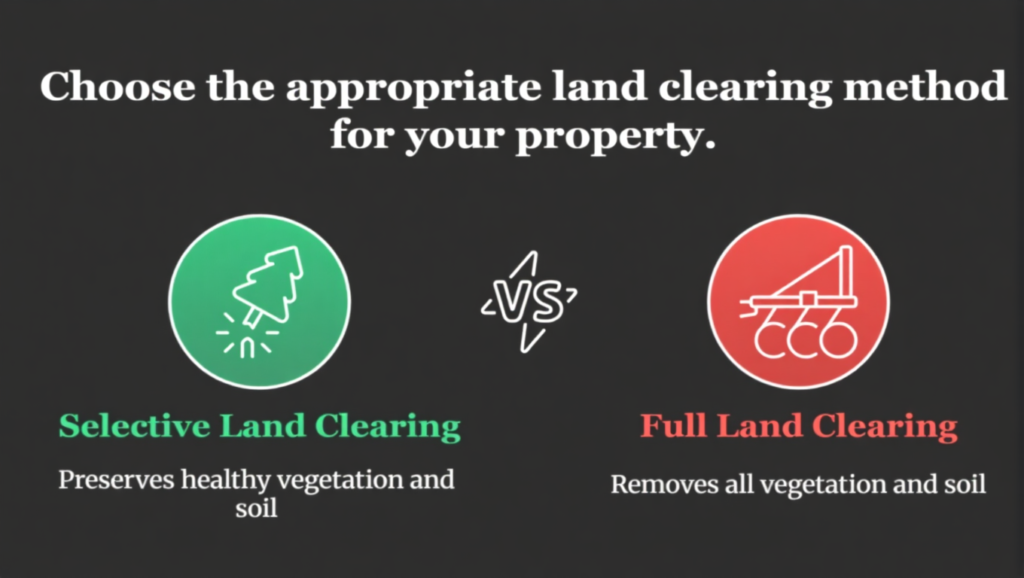
🔸Selective Land Clearing means you only remove problem plants, dead trees, brush, or things in your way. This targeted approach is a hallmark of precise land clearing services canton ga that aim to preserve healthy trees and soil.
🔸Full Land Clearing means everything goes. It’s a comprehensive solution offered by clearing services atlanta ga for projects requiring a completely blank slate.
In 2025, clearing land costs about $1,400 to $5,600 per acre on average. Light brush might only cost $500-$1,500 per acre, while thick forest can hit $2,000-$5,600 or more.
Full clearing can sometimes cost less upfront if you have a big, flat site. Big machines like bulldozers work fast and handle large areas quickly. Selective clearing might take more time and skill to pick out specific plants, which can raise costs on complex sites.
Read More: Do You Need Land Clearing Before a New Home Build in Georgia? (Most People Get This Wrong)
But here’s the thing: if you don’t need every inch cleared, selective clearing reduces how much work you actually do. Less work means lower costs.
Full clearing might be faster at first, but it creates hidden costs that add up:
🔸Getting Rid of Debris
Full clearing creates massive piles of waste. Hauling it away costs serious money. Selective clearing leaves more on-site, and you can even turn debris into mulch that feeds your soil—no hauling fees at all.
🔸Keeping Your Soil Healthy
Strip everything bare and your soil erodes, gets packed down, and loses nutrients. Then you’re spending money on repairs, soil treatments, or fixing storm damage. Selective clearing keeps root systems intact, which holds your soil in place naturally. You spend less on upkeep and replanting.
🔸Dealing with Permits and Rules
Environmental rules are getting stricter. Full clearing often requires more permits, environmental reviews, or replanting requirements. Selective clearing is easier on the ecosystem, so you might get incentives like carbon offset programs or lower fees.
🔸Your Property Value
Keeping trees and natural features makes your land look better and worth more—especially for homes or eco-friendly projects. Full clearing leaves bare ground that needs expensive landscaping to make it attractive again.
Studies back this up: full clearing works well for huge projects because of speed, but selective clearing causes less damage and usually costs less overall.
Use Technology
Clear in Stages
Look for Incentives
| Clearing Method | Pros | Cons |
| Selective Clearing | Lower Initial Cost: Uses less machinery and hauling, often costing less than full clearing. Eco-Friendly: Minimizes erosion, preserves soil fertility, and supports wildlife habitats. Value-Boosting: Retains mature trees and natural features that can enhance property value. Easier Compliance: Reduced disturbance often means simpler permitting and fewer environmental restrictions. | Slower Process: Requires careful planning and precision, which can extend timelines. Partial Limitation: May not open enough space for very large-scale uses without added work. Potential Safety Concerns: Remaining trees can pose risks (pests, falling limbs) if not properly managed. |
| Full Clearing | Complete Flexibility: Creates a blank canvas—ideal for large buildings, fields, or subdivision layouts. Speed: Heavy equipment can clear large areas quickly, reducing labor time. Uniform Base: Removes stumps and roots, lowering the risk of future engineering surprises. | High Upfront Cost: Greater fuel, labor, equipment use, and debris disposal expenses. Environmental Impact: Loss of topsoil, increased runoff, and habitat disruption may require costly controls and restoration. Regulatory Hurdles: More likely to trigger strict permits and mitigation requirements. Ongoing Maintenance: Bare land often needs regrading, reseeding, or irrigation to prevent erosion and dust. |
For most situations, selective land clearing saves more money long-term. It cuts waste, protects your land’s value, and prevents future problems. Full clearing makes sense when you truly need a blank slate right away—but be ready for higher costs down the road.


