
 Skip to content
 Is your yard always soggy after rain? Does your grass look half-dead even when you water it? The culprit might be hiding just a few inches underground — and it’s called a hardpan soil layer.
Here in North Georgia, this invisible problem wrecks lawns, floods driveways, and kills plants every single year. The good news? Once you know what it is, you can fix it. And for this, Contact Bucktown Grading and Construction today for a free estimate.
A hardpan soil layer is a dense, rock-hard band of compressed soil sitting just 3–10 inches below your lawn’s surface. Think of it like an underground concrete slab. Water can’t drain through it. Roots can’t grow past it. Air can’t move through it.
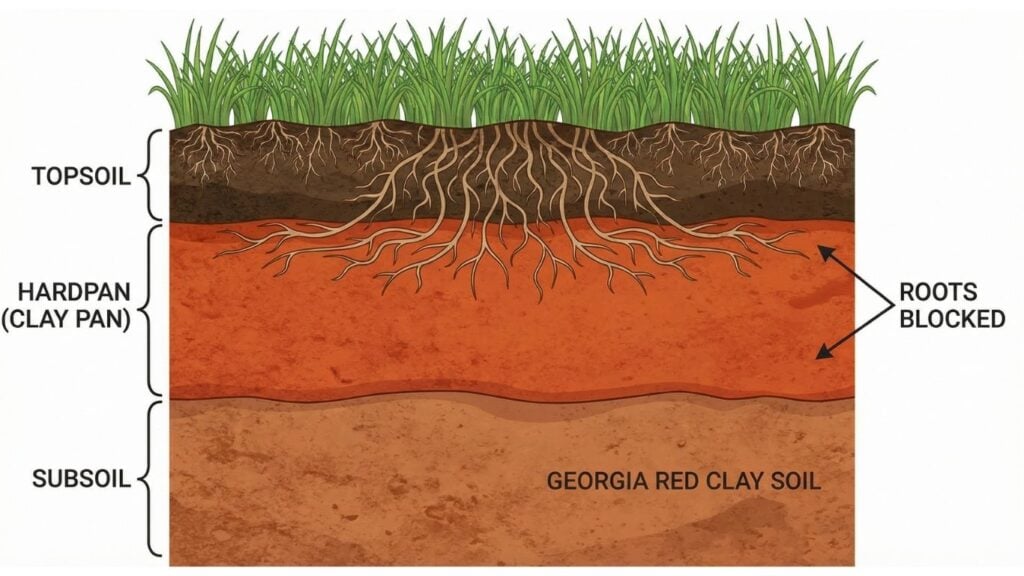
And in North Georgia? Almost every yard has one.
📌 Quick Fact: Clay content in Forsyth, Cherokee, and Gwinnett counties typically runs 40–60% — well above the healthy range for most grass types.
Our famous red clay packs together like bricks when it’s compressed. Construction equipment, foot traffic, and even regular mowing push those tiny clay particles tighter and tighter over time.
The result is a hardpan soil layer that traps water above it — turning your yard into a swamp after every rainstorm. Then, a few days later, that same yard dries out and cracks because the water never reached deep enough to feed your roots.
It’s a brutal cycle. Waterlogged one week. Drought-stressed the next.
You don’t need a soil scientist to figure this out. Look for these red flags:

Try the screwdriver test: Push a long screwdriver into moist soil. If it stops within 3–4 inches, you’ve got a hardpan soil layer blocking the way.
Shallow roots can’t support healthy turf through Georgia’s brutal summers. Studies show that lawns with significant compaction lose up to 40% of their drought resistance compared to properly aerated soil.
A hardpan soil layer also worsens foundation problems. When water can’t drain down, it moves sideways — pooling against your home’s foundation, causing cracks, settling, and expensive repairs down the road.
According to the University of Georgia Extension Service, soil compaction is one of the leading causes of poor turf performance across North Metro Atlanta.

This is your first weapon. A core aerator pulls small plugs of soil out of the ground, punching through the hardpan soil layer and opening up channels for air, water, and roots.
After aeration, spread a thin layer of compost or sand-compost mix over the lawn. This material falls into the aeration holes and begins improving soil structure from the inside out.
It won’t fix everything overnight — but after 2–3 seasons of consistent top dressing, your soil biology starts to shift dramatically.
Aeration helps, but if you have serious grading issues or low spots, you need to redirect water before it compacts the soil further. Options include:
This is where professional grading makes a massive difference. A properly graded yard stops the hardpan soil layer from reforming year after year.
Daily light watering makes compaction worse. It keeps the top inch soggy while never reaching deeper roots — and it’s a paradise for dollar weed and disease.
Switch to 1–2 deep waterings per week, applying about 1 inch of water total. This dries out the surface (which weeds hate) while training roots to grow deeper through any remaining hardpan soil layer gaps.
Left alone, a hardpan soil layer gets worse every single year. Traffic, rainfall, and freeze-thaw cycles keep pushing particles tighter together. Weeds move in. Grass thins out. Foundation issues quietly grow.
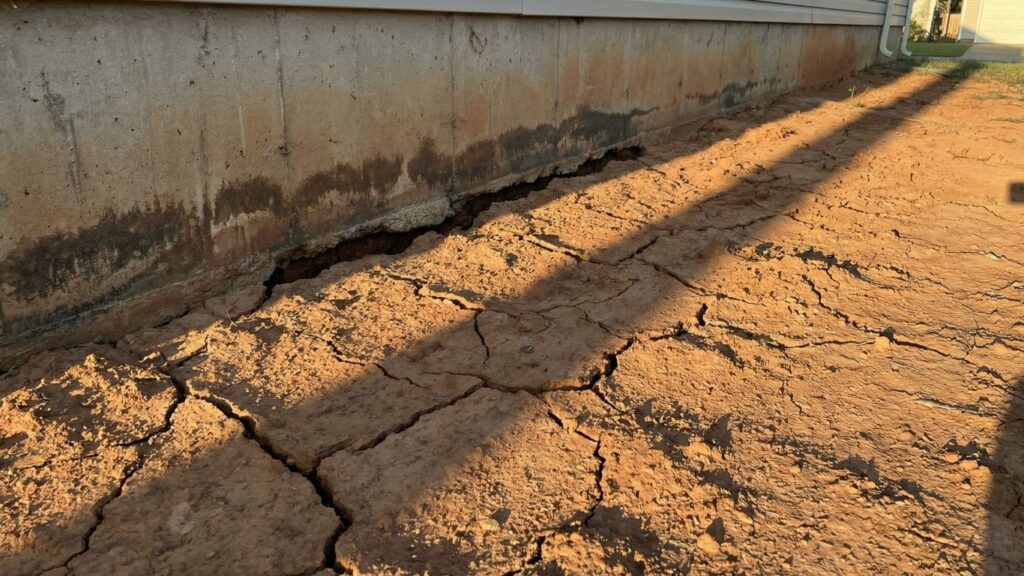
By the time most homeowners notice serious problems, they’re looking at full lawn renovation — or worse, structural repairs to their home.
The best lawns in Cumming, Canton, and Ball Ground aren’t just well-watered and well-fertilized. They’re built on soil that actually lets water, air, and roots do their jobs.
Breaking up your hardpan soil layer is the foundation of everything. Fertilizer can’t help if nutrients get trapped near the surface. Water can’t help if it pools instead of penetrates.
If your lawn is struggling and you’re tired of throwing money at products that don’t work, the problem might be underground — not on the surface.
Contact Bucktown Grading and Construction today for a free property assessment. We’ll find out exactly what’s going on beneath your lawn and give you a clear, honest plan to fix it — before the next rainstorm makes it worse.
📞 Call us or visit our website to schedule your free estimate.


