
 Skip to content
 Don’t you know that improper yard grading sends rainwater directly into your home’s foundation, of course causing basement flooding, mold growth, and structural cracks. As, Poor yard grading often leads to water pooling near foundation, basement flooding, soil erosion, and foundation damage
When considering Land Clearing Services in Savannah GA it’s important to know that improper yard grading sends rainwater directly into your home’s foundation, leading to basement flooding, soil erosion, and foundation damage. That’s why professional land clearing includes proper grading techniques that protect your property from these costly issues. Therefore, Ignoring slope mechanics basically turns a simple landscaping project into thousands of dollars in foundation repair and erosion damage.
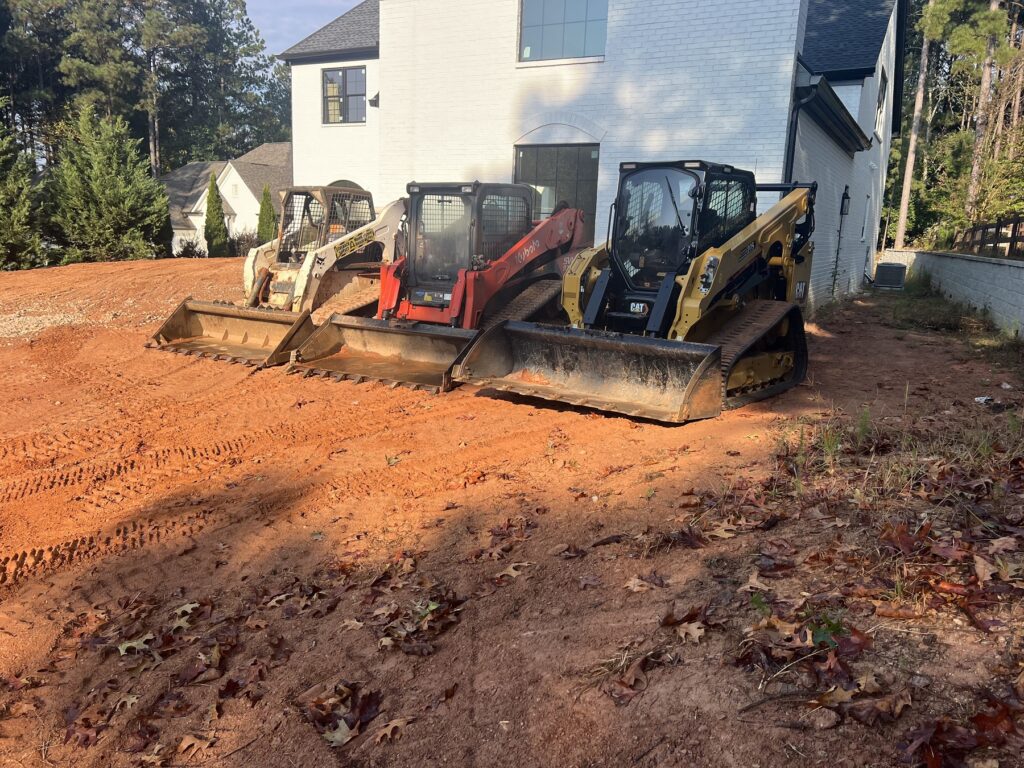
Read More: Yard Sloping Toward Your House? Here’s How to Fix It
Soil angles direct water toward the foundation rather than away. Causes basement leaks, mold growth, and expensive foundation cracks.
The Fix: Establish a minimum 5% grade (6-inch drop over 10 feet) sloping away from the structure.
Treating loose sand and heavy clay as identical materials. Leads to rapid erosion (sand) or water pooling and expansion (clay), damaging hardscapes.
The Fix: Test soil before grading; amend sand with topsoil for stability and plan aggressive drainage for clay.
Moving dirt without mapping where the water will exit. Creates standing water “bogs” that kill grass and breed mosquitoes.
The Fix: Install French drains, swales, or dry wells to guide water to a safe exit point.
Stripping all trees, shrubs, and root systems before grading. Destroys natural soil anchors, causing immediate slope instability and washouts.
The Fix: Preserve vegetation on slopes and use temporary erosion control blankets on bare spots.
Leaving dips, bumps, and inconsistencies in the graded surface. Results in “birdbath” puddles that soften the ground and rot turf roots.
The Fix: Use a laser level or string line to ensure a smooth, consistent decline.
Filling in natural swales or runoff paths to flatten the yard. Forces water into unpredictable paths, often flooding neighbors’ yards (legal liability).
The Fix: Work with topography; install culverts or pipes to maintain flow under flattened areas.
Grading without accounting for planned patios, driveways, or pools. Requires costly re-excavation later and causes concrete cracks due to settling soil.
The Fix: Blueprint hardscapes first; leave level pads for construction and grade around them.
Cutting stumps flush with the ground and burying the roots. Wood rot creates underground voids, leading to sudden sinkholes and surface collapse.
The Fix: Grind stumps 12+ inches below grade or fully excavate root balls.
Attempting to grade slopes steeper than 20% without heavy machinery. High risk of equipment rollover, landslides, and drainage failure.
The Fix: Hire a geotechnical engineer or professional grader for complex inclines.
Leaving fresh, loose soil exposed to the elements. One heavy rain can wash away days of work and clog drainage pipes with silt.
The Fix: Immediately stabilize soil with hydro-seed, sod, or straw mats.
| Category | Do’s ✅ | Don’ts ❌ |
| Slope | Slope soil away from house (min. 5% grade). | Do not slope soil toward the foundation. |
| Soil Prep | Test soil type; compact in layers (lifts). | Do not assume all soil types compact the same. |
| Water | Plan drainage (swales/French drains). | Do not grade without a specific water exit plan. |
| Vegetation | Preserve roots near slopes/drainage paths. | Do not clear-cut vegetation unnecessarily. |
| Surface | Create smooth, consistent declines. | Do not leave bumps, dips, or “birdbaths.” |
| Channels | Install culverts for natural water paths. | Do not block or redirect natural waterways. |
| Future | Plan grading around future hardscapes. | Do not ignore future patio/driveway needs. |
| Debris | Remove stumps/roots fully. | Do not bury stumps and build over them. |
| Safety | Hire pros for steep/complex slopes. | Do not attempt dangerous angles without experience. |
| Finish | Stabilize soil immediately (seed/mulch). | Do not leave bare soil exposed to rain. |
Subject: Residential Property, Moderate Reactive Clay Soil.
Source: AZTA Engineering, Forensic Site Inspection.
The Problem: A homeowner reported a damp patch and a fine diagonal crack (less than 2mm wide) on an interior basement wall. They initially suspected a plumbing leak.
The Investigation: Forensic engineers found that landscaping work had disconnected a roof downpipe. Instead of flowing to the street stormwater system, the downpipe was discharging roof runoff directly into the soil immediately adjacent to the foundation.
The Mechanism: The property sat on “reactive clay” soil. The concentrated water caused the clay to swell significantly (heave), exerting immense lateral and upward pressure on the foundation walls.
The Result: The foundation twisted, causing differential movement and structural cracking. The “minor” damp patch was the visible symptom of a major hydraulic pressure failure caused by a single grading/drainage error.
A: Spring or Fall. Soil moisture is usually optimal for compaction. Summer soil is too dry and hard; Winter soil is frozen and cannot be compacted properly.
A: No. Fixing grading errors typically costs 2-3 times more than doing it correctly the first time. You pay for the initial work, the demolition/removal of the bad work, and the structural repairs (foundation cracks) caused by the error.
A: Steel-toed boots, leather gloves, eye protection, and dust masks. Always call 811 (or your local utility locator) to mark underground lines before digging.


