
 Skip to content
 Forestry mulching clears land efficiently using specialized equipment that grinds trees, brush, and undergrowth into mulch in a single pass. The machine not only cuts and grinds but also spreads the material on-site as natural ground cover, helping to reduce erosion and promote soil health. This process often complements other land preparation tasks, such as Grading Services in Athens GA where precise leveling and contouring of the land are essential before construction or landscaping. Combining forestry mulching with professional grading ensures a clean, stable, and well-prepared site ready for development.
Unlike traditional clearing that involves cutting, hauling, and burning debris, mulching handles everything in a single operation. The resulting mulch layer reduces erosion, improves soil health, and eliminates disposal costs. Looking up forestry mulching cost per hour? Here’s what contractors actually charge and what affects your final bill.
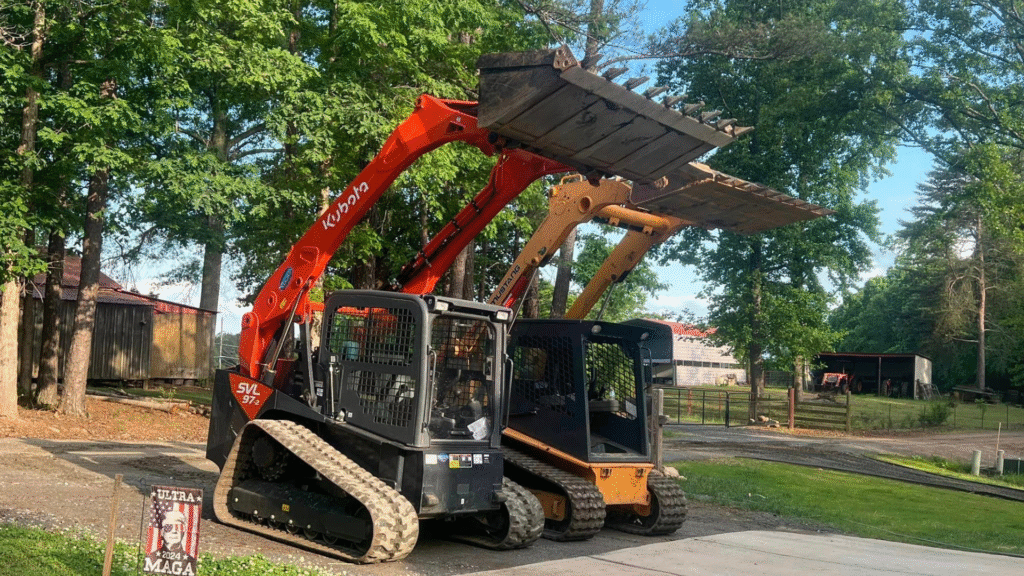
Typical range: $150 to $300 per hour
This covers both the machine and operator. The rate varies based on job complexity.
Lower end ($125-$200/hour):
Mid-range ($200-$275/hour):
Upper end ($275-$400/hour):
Read More: Land Clearing Atlanta: Your Complete Guide to Professional Site Preparation
Vegetation density
Light brush clears fast. Dense hardwoods slow everything down. Thick vegetation wears equipment faster and requires more powerful machines.
Terrain conditions
Flat ground keeps forestry mulching cost per hour lower. Steep slopes, rocks, wet areas, or remote locations increase difficulty and risk. Equipment struggles more and work slows.
Machine type and power
Skid steer mulchers cost less per hour but clear slower. Heavy mulching tractors or excavator units cost more but power through tough jobs much faster. High-flow hydraulics and advanced mulching heads drive up hourly rates.
Location and regional factors
Urban areas with high demand charge more. Rural markets might run cheaper. Local wage levels, fuel costs, and regulatory requirements all impact pricing.
Areas with strict fire mitigation rules or environmental permits tend to see rates at the higher end.
Accessibility and mobilization
Easy access from main roads keeps costs reasonable. Remote locations require more transport time and setup effort. Long hauls to the site add mobilization fees on top of hourly rates.
Light vegetation (grass, shrubs, small saplings under 4 inches):
Moderate vegetation (mixed brush, small trees 4-8 inches):
Dense vegetation (large trees over 8 inches, heavy undergrowth):
The denser the vegetation, the slower the work and the higher the effective forestry mulching cost per hour.
Oklahoma operation: $200/hour with a 3-hour minimum ($600 base). They run specials like 5 hours for $800.
Georgia company: $2,500 for an 8-hour day. They clear 1-2 acres per day depending on density, working out to roughly $1,500-$2,000 per acre on larger projects.
North Carolina market: $150-$300/hour is standard. Rates projected to increase 6-9% due to suburban expansion and wildfire mitigation demand.
Some contractors quote by the acre instead of hourly. Common range: $400 to $3,000 per acre.
Small residential lots (under 1 acre): $1,500 to $3,500 per acre. Higher per-acre cost due to mobilization minimums and setup time.
Large commercial projects (5+ acres): $1,000 to $2,000 per acre. Economies of scale bring the per-acre cost down.
Heavy forest or difficult terrain: $2,000 to $3,000+ per acre. Dense trees and challenging conditions slow production significantly.
The per-acre price is really just the hourly rate multiplied by how long it takes to clear an acre. If dense vegetation slows the machine from 1 acre/hour to 0.5 acres/hour, the per-acre cost doubles even if the hourly rate stays the same.
Breaking down a typical $250/hour charge:
Labor (30% – $75): Skilled operators with specialized training. Operating heavy mulching equipment safely requires experience. Better operators work faster and deliver cleaner results.
Fuel and lubricants (20% – $50): High-horsepower machines consume serious diesel. Hydraulic systems require constant lubrication. Fuel costs fluctuate with energy markets.
Maintenance and wear parts (25% – $62.50): The biggest variable in forestry mulching cost per hour. Mulcher teeth cost around $80 each and wear out fast, especially in rocky conditions. A machine with 40 teeth might need 10 replaced after a tough job—that’s $800 right there.
Frequent maintenance includes hydraulic repairs, track replacement, and general upkeep. These machines are maintenance-intensive.
Equipment depreciation and insurance (15% – $37.50): Mulching equipment costs $10,000 to $500,000 depending on size and capability. This portion recovers the capital investment. Insurance is expensive due to the high-risk nature of the work.
Overhead and profit (10% – $25): Administration, marketing, business expenses, and necessary profit margin to keep the operation running.
Mobilization fees: Transport costs to get heavy equipment to your site. Typically $1 to $5 per mile depending on distance and machine size. Local moves often cost more per mile than long-distance hauls.
Minimum charges: Most contractors require a 3-4 hour minimum even for small jobs. Covers setup, mobilization, and baseline equipment wear. Minimum fees typically start around $400-$1,000.
Site preparation: Clearing obstacles, marking boundaries, removing fences or debris. Some quotes include this, others charge extra. Can add $500 to $1,500.
Permits and regulations: Local permits for land clearing might be required depending on location. Costs vary from $50 to several hundred dollars. Environmental assessments add more in sensitive areas.
Post-clearing work: Stump grinding, debris removal, erosion control, or seeding aren’t always included. These can add hundreds to thousands depending on scope.
Skid steer mulchers:
Track loader mulchers:
Mulching tractors (high-horsepower):
Excavator-mounted mulchers:
Drum vs. disc mulchers: Drum mulchers produce finer mulch and grind stumps to ground level, but work slower. Disc mulchers clear faster but leave rougher mulch and visible stumps. Disc models can save $100-$150 in fuel and maintenance on large 50+ acre projects due to faster operation.
This is counterintuitive but important.
A skid steer at $150/hour clearing 1 acre per day on a 5-acre job takes 5 days. Total: $6,000 (assuming 8-hour days).
A heavy mulching tractor at $300/hour clearing 5 acres per day finishes in 1 day. Total: $2,400.
The expensive machine costs 60% less overall because it works so much faster. For large projects, equipment capability matters more than the hourly rate.
High-demand urban/suburban markets: Rates push toward $250-$350/hour. Competition for contractors is fierce in expanding areas with new development.
Rural agricultural areas: More competitive pricing, often $125-$200/hour. More contractors available and lower operating costs.
Wildfire mitigation zones (Western US): Premium rates of $300-$400/hour are common. Specialized compliance and regulatory requirements justify the higher cost.
Southeast US: Generally $150-$250/hour for standard work. Georgia, North Carolina, and similar markets cluster in this range.
Prepare the site yourself
Remove debris, rocks, old fencing, and metal scraps before the contractor arrives. Every obstacle the mulcher hits slows the work and wears teeth faster. Clean sites = faster production = fewer billable hours.
Schedule during off-peak seasons
Contractors may offer better rates during slower months. Late fall through early spring often sees less demand in many regions.
Bundle services
If you need multiple land management tasks done, combine them. Mulching plus debris removal plus seeding might qualify for multi-day discounts.
Get multiple detailed quotes
Don’t just compare the forestry mulching cost per hour. Ask what’s included. Does the rate cover mobilization? Site prep? Post-clearing cleanup? Hidden costs add up fast.
Match equipment to the job
For large acreage, insist on appropriate heavy equipment. Paying more per hour for a capable machine that finishes in a fraction of the time saves money.
Consider selective clearing
If you don’t need everything cleared, mark zones to preserve. Reducing the scope reduces total hours.
Small residential lot (0.5-1 acre, light brush): $1,500 to $3,000 total Usually hits minimum charges hard
Moderate residential (2-3 acres, mixed vegetation): $3,000 to $7,500 total More efficient per-acre rate kicks in
Large residential/small commercial (5-10 acres): $5,000 to $20,000 total Economies of scale reduce per-acre cost significantly
Commercial right-of-way or pasture (20+ acres): $20,000 to $50,000+ total Best per-acre rates but requires heavy equipment
Dense forest clearing: Add 50-100% to these estimates depending on tree size and terrain difficulty.
Some contractors offer daily rates instead of hourly. Typical full day: $1,000 to $2,500 for 8-10 hours including setup.
Example conversion:
The math connects. Per-acre pricing reflects expected productivity at the given hourly rate.
Read More: Handpicked Remodeling Companies in North Georgia [2025 Guide]
Unusually low quotes: If someone quotes $75/hour when everyone else says $200, question the equipment quality, operator experience, or insurance coverage. Cheap often means inadequate.
No insurance proof: Operating heavy equipment without proper coverage puts you at serious liability risk.
Vague “we’ll see how it goes” pricing: Get clear terms upfront. Open-ended billing creates disputes.
Can’t explain what equipment they’ll use: Professional contractors know their machines and can match them to your job requirements.
No references or past work examples: Established operators should easily provide examples and customer contacts.
Budget $150-$300/hour for standard forestry mulching work. Simple jobs on flat ground might run cheaper. Dense forest on difficult terrain costs more. Small projects under 1 acre hit minimum charges hard, often pushing the effective per-acre cost to $2,000-$3,500.
Large projects benefit from economies of scale and more efficient equipment, bringing per-acre costs down to $1,000-$2,000 or even lower on very large tracts.


