
 Skip to content
 You have acres of potential sitting right outside your fence line. Trees, brush, stumps, and overgrown scrub are blocking crops, equipment, and income. That is the reality for thousands of farmers trying to scale up today.
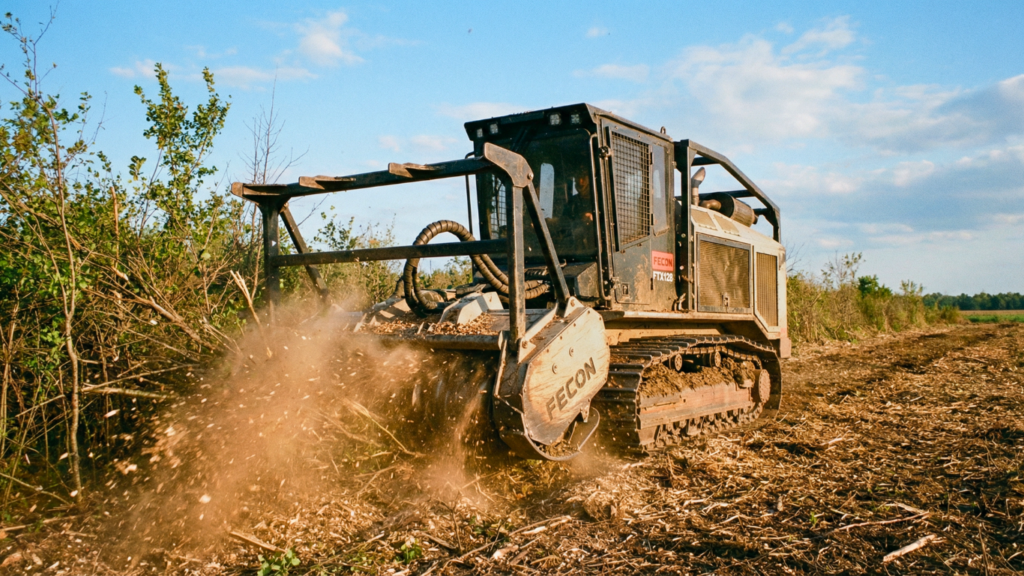
The good news is that professional land clearing turns that blocked potential into productive ground, sometimes within a single season. Farmers who invest in it often describe the transformation as dramatic, going from tangled woodland to open, workable fields their equipment can finally reach.
Land clearing is the process of removing trees, brush, stumps, rocks, and debris from a piece of ground so it can be used for agriculture, livestock, or infrastructure. You have acres of potential sitting right outside your fence line. Trees, brush, stumps, and overgrown scrub are blocking crops, equipment, and income. That is the reality for thousands of farmers trying to scale up today. The good news is that professional Lot & Land Clearing turns that blocked potential into productive ground, sometimes within a single season.
For farmers, it is not just about removing obstacles. It is about unlocking usable acreage that is already yours. According to the USDA Economic Research Service, the average American farm has expanded by over 20 percent in total operated acres since 2000, and much of that expansion came from clearing and reclaiming underutilized land. You can explore current USDA farmland data
Every acre sitting in brush is money left on the table. Here is what uncleared land costs a working farm operation:

Proper land clearing solves all four of those problems at once. It does not just open ground. It improves the health and productivity of the ground you already farm.
Step 1: Site Assessment
Before any equipment rolls in, a qualified contractor walks the property and maps what needs to go, what can stay, and what the soil condition is underneath. Good land clearing starts with a plan, not a chainsaw.
Step 2: Tree and Brush Removal
Large trees get felled and processed. Smaller brush and undergrowth are typically mulched or pushed into piles for burning or hauling. Modern mulching equipment can grind brush and small trees directly into the soil, adding organic matter back in.
Step 3: Stump Grinding and Root Removal
Stumps left in place will break equipment and block tillage for years. Stump grinding removes the above-ground material, while deeper root raking pulls out major root balls so tillage equipment can work the ground properly.
Step 4: Grading and Soil Prep
Once cleared, the ground usually needs rough grading to establish drainage and levelness before it can be planted or used for livestock operations.
The transformation that comes with professional land clearing is one of the most visible upgrades a farm can make.
Before: Dense stands of scrubby trees, blackberry cane, and invasive brush covering 15 acres adjacent to an active corn field. Drainage pooling at the tree line. Equipment cannot enter. Deer pressure heavy at the edge.
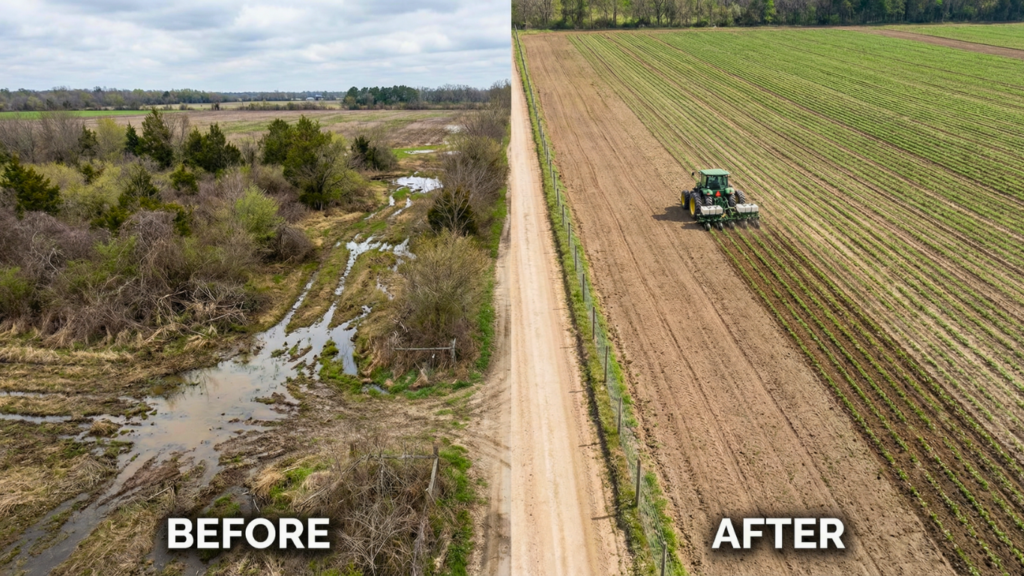
After: 15 open, graded acres tied seamlessly into the existing field. Drainage corrected with a slight slope toward the field edge. The combined field can now be worked with a single pass, cutting fuel and time costs significantly.
Not all land clearing is the same. The right method depends on your soil type, slope, tree density, and intended use.
| Method | Best For | Notes |
|---|---|---|
| Bulldozing | Heavy tree density, rocky ground | Fast but rough on topsoil |
| Forestry Mulching | Light to medium brush | Preserves topsoil, adds organic matter |
| Hand Clearing | Sensitive slopes, selective removal | Slower, more precise |
| Burning | Dry brush, flat open fields | Requires permits, weather dependent |
For most agricultural expansion projects, forestry mulching combined with stump grinding gives the best balance of speed, soil health, and cost.
One of the most underappreciated benefits of land clearing is what it does for water management on your property.
Overgrown areas trap and redirect surface water in unpredictable ways. Root masses create subsurface channels that cause erosion where you least expect it. When you clear and grade properly, you control where water goes, which protects your topsoil, your crops, and your foundation if you have any farm structures nearby.
Farms that combine land clearing with basic drainage grading consistently report fewer washout events and better crop establishment in wet springs. That is a compounding benefit that pays off year after year.
Ask yourself these three questions:

If you said yes to any of those, a land clearing consultation is worth your time. The return on investment for well-planned land clearing typically comes within two to three growing seasons on productive row crop ground.
You do not need to keep farming around the land you have. The acres sitting in brush and timber are within reach, and the process is faster and more affordable than most farmers expect.
Contact Bucktown Grading and Construction today for a free on-site estimate. We will walk the ground with you, explain the best clearing method for your property, and give you a clear picture of what your expansion could look like.
Your next productive field is already there. It just needs to be cleared.


