
 Skip to content
 You’ve cleared the trees and brush from your land on Post Clearing Site Prep. Now what? The work isn’t done yet. What comes next is just as important as the clearing itself. So, locals matters so as the top notch Site Preparation Services in Georgia is the next phase gets your land ready for whatever you’re building, a home, a farm, or something else. Skip these steps, and you could face big problems like erosion, unstable ground, or expensive fixes down the road.
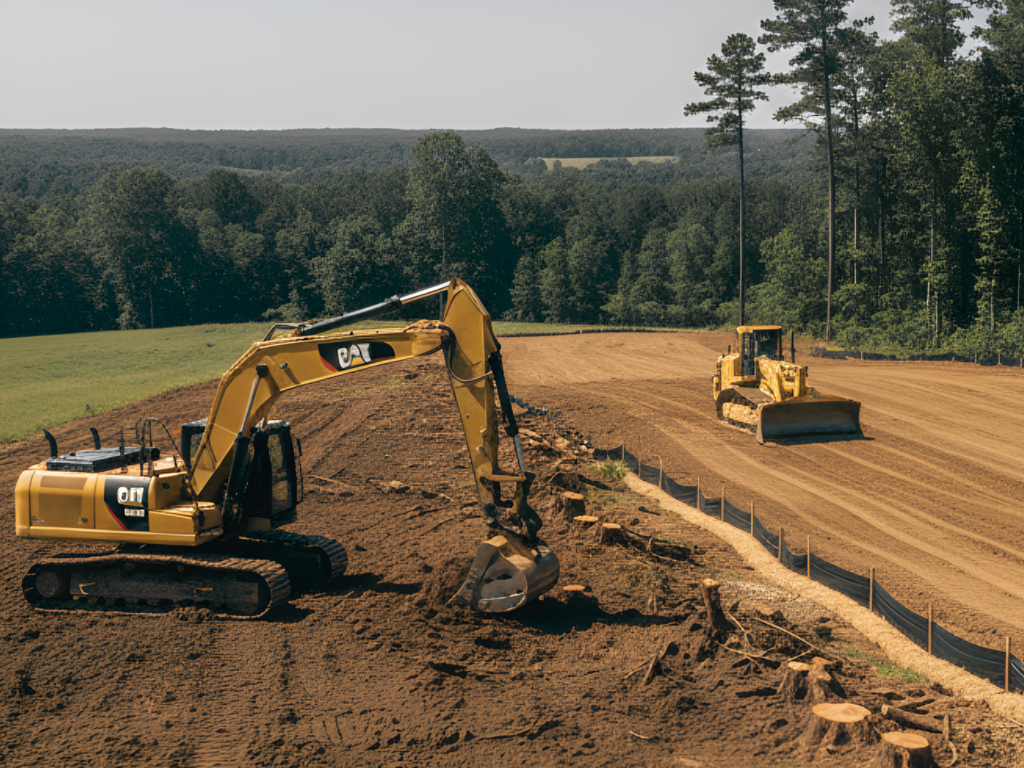
🔸 Land clearing removes what you can see above ground. We’re talking about trees, bushes, rocks, and debris. Crews use bulldozers, chainsaws, and mulchers to clear the surface.
Read More: How Weather Delays Impact Excavation Costs in Georgia
🔸 Grubbing goes deeper. It removes what’s hidden below the surface—tree roots, stumps, buried trash, and rotting plant matter. This matters because old roots don’t just disappear. They break down over time and create empty spaces underground. Those spaces can cause your soil to sink or shift, which spells trouble for any building. Grubbing also helps your soil compact properly and keeps you in line with building codes.
First, haul away everything that was cut down. That means trees, branches, wood chips, and any other waste. A clean site is a safe site, no fire risks, no tripping hazards. This step also includes filling in holes left behind from removing stumps.
This is the grubbing part. Crews use excavators and backhoes to dig up large root systems. They also screen the soil to pull out buried rocks and organic waste. This work might go several inches deep. It clears out anything that could cause erosion or make the ground unstable later.
Read More: Why Georgia Clay + Rain Is Every Excavator’s Nightmare
Next, shape the land so water drains properly and the surface is even. Heavy machinery smooths out bumps and dips. Good grading stops water from pooling, which can lead to flooding or weak, soggy soil.
Now the soil gets compacted so it can hold up buildings or heavy equipment. After that, erosion controls go in things like silt fences or grass seed. These protect the soil from washing away, especially on hills or near water.
The final steps depend on what you’re doing with the land:
Throughout all of this, The Post Clearing Site Prep is protecting nearby ecosystems matters. So does following local rules and regulations. These steps help you develop your land responsibly. Most people hire professionals to handle site prep. It’s the best way to avoid risks and get your land ready the right way.
After trees, shrubs, and undergrowth are cleared, the site is inspected and debris (branches, stumps, roots) is hauled off, mulched, or otherwise removed to create a clean work area.
Grading and leveling ensure that the ground is even and that water drains properly away from future structures. This helps prevent erosion, standing water, and foundation issues later on.
Yes—soil testing is a key next step after clearing. It determines soil strength, composition, and compaction, which are critical for foundation stability, landscaping, and proper drainage.
After clearing and grading, the typical prep steps include:
Often, yes. In areas like Canton, GA, local regulations may require permits for land clearing and site alteration, and inspections may be required to ensure proper drainage, erosion control, and grading compliance before construction can begin.


